What is FODIP?
Share:
- What is FODIP?:
- Study Tours:
- How we can help:
- Projects:
- Why is this needed?
- Our goals and values:
- Who we are:
The Forum for Discussion of Israel and Palestine (FODIP) is a registered UK charity.
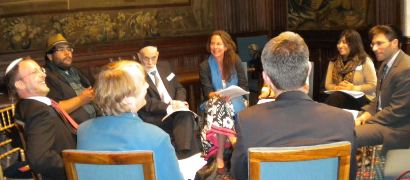
Its remit is to host and facilitate sensitively inter faith dialogue on the Israeli Palestinian conflict, within and between Jews, Christians, Muslims and others in the UK, and to promote co-operation through dialogue.
FODIP works through:
Contact FODIP
FODIP works through:
- Hosting events for speakers and organisations from the region.
- Academic working groups.
- Using established networks and providing a consultancy on related issues.
- Issuing regular bulletins and up-dates.
- Advice and Information.
- Learn how to facilitate conversations locally through our ‘Hear to Hear’ method.
- FODIP acts as a link and a resource for local and national organisations and for religious institutions.
Contact FODIP
'Questions Without Borders' Study Tours.
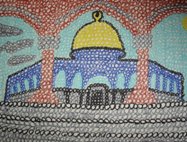 Nowhere on earth evokes such a sense of purpose and passion as the Land we call Holy. Jews, Christians and Muslims have prayed for and fought over this piece of land for centuries. It is often hard to know how best to respond to the terrible situation there; different approaches and perspectives make for divisions and conflicts within British society. However, the Holy Place plays a large part in our prayers, liturgies, traditions and backgrounds.
 FODIP Study Tours are based on the idea that we may know less than we think, and that a true engagement with the land and the people throws up more questions than answers.
The tour welcomes Jews, Christians and Muslims, and anyone who wants to see the realities, hear the voices and stories of those living there and learn more of their endeavours, hopes and fears for the future.

Nowhere on earth evokes such a sense of purpose and passion as the Land we call Holy. Jews, Christians and Muslims have prayed for and fought over this piece of land for centuries. It is often hard to know how best to respond to the terrible situation there; different approaches and perspectives make for divisions and conflicts within British society. However, the Holy Place plays a large part in our prayers, liturgies, traditions and backgrounds.
FODIP Study Tours are based on the idea that we may know less than we think, and that a true engagement with the land and the people throws up more questions than answers.
The tour welcomes Jews, Christians and Muslims, and anyone who wants to see the realities, hear the voices and stories of those living there and learn more of their endeavours, hopes and fears for the future.
How we can help you
The Israeli/Palestinian situation is arguably the most sensitive area for those involved in inter faith or cross communal dialogue. It can be a daunting prospect, even where people feel the need to open up such a conversation.
Our programme of workshops will shortly appear here and bookings will be available online here too.
(The dates are currently being arranged. Please contact us for details in the meantime.)
We can also run a workshop or presentation to any group. The costs for this start as low as £25 for a single hour session. If you would like to explore holding a custom-made workshop for your group or institution, please contact us on 01869 787458 or email [email protected].
Topics dealt with:
Facilitating dialogue on the Israeli/Palestinian situation.
Addressing the issues.
Conflict resolution.
The Israeli/Palestinian situation is arguably the most sensitive area for those involved in inter faith or cross communal dialogue. It can be a daunting prospect, even where people feel the need to open up such a conversation.
Our programme of workshops will shortly appear here and bookings will be available online here too.
(The dates are currently being arranged. Please contact us for details in the meantime.)
We can also run a workshop or presentation to any group. The costs for this start as low as £25 for a single hour session. If you would like to explore holding a custom-made workshop for your group or institution, please contact us on 01869 787458 or email [email protected].
Topics dealt with:
Facilitating dialogue on the Israeli/Palestinian situation.
Addressing the issues.
Conflict resolution.
PROJECTS
We run a number of projects to help Jews, Christians and Muslims and those of no or other faiths in the UK, explore issues of pilgrimage, conflict, identity and citizenship in the context of Israel and Palestine.
WALKING THE TIGHTROPE
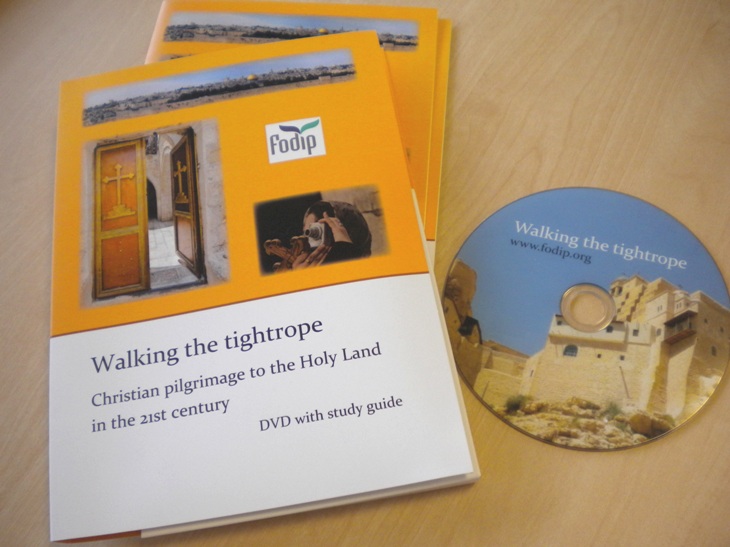 While our work generally involves all faiths and none in dialogue together, each faith does
have specific needs and questions to address. This resource is designed for Christians in
particular.
While our work generally involves all faiths and none in dialogue together, each faith does
have specific needs and questions to address. This resource is designed for Christians in
particular.
What are the expectations of Christians who go on pilgrimage to the Holy Land? What should pilgrimage be about?
Travelling to the Holy Land cannot be a neutral activity. Decisions and choices made always affect the people who live there in one way or another. This 30 minute DVD puts the case for a pilgrimage which engages with both the historical stones and the 'living stones' - the people of the Land.
The film uses interviews with Jews, Christians and Muslims, Israelis and Palestinians, and travels around the holy sites. It asks potential pilgrims to consider how they can bring Christian values to their pilgrimage.
Also included are a Study Guide (divided into 6 sections) to accompany the DVD and a 12- page booklet 'Planning Your Pilgrimage', with useful notes, contacts and a brief history of Christian travel in the Holy Land.
All this for only £8.99 + £2.95 p&p!
Produced with support from the United Reformed Church and the Sir Halley Stewart Trust
To get your copy, send a cheque and your postal details to: FODIP, CMS House, Watlington Road, Cowley, Oxford OX4 6BZ, or use the button below to pay via PAYPal (includes a facility to use a credit/debit card.)
WOMENS VOICES
Based in Greater Manchester, this project provides young women with skills to manage and deliver community-based projects. (Contact: [email protected]) Sponsored by Paul Hamlyn Foundation. Read more>>>>>
TOUGH OPTIONS
FODIP is experienced in helping groups and individuals explore how we feel about the Holy Land, our differing fears and our shared hopes.
We offer training to those wanting or needing to facilitate such dialogue.
Contact us for further details.
We are also happy to advise or provide information on dialogue or travel for interfaith groups or individuals free of charge.
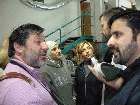 "Reassuring and positive!"
"Constructive and reflective activities made emotions easier to contain."
"Nice focus on the future and concrete actions to be taken."
"A distinctive contribution to dialogue on Israel-Palestine."
Download our Ten Principles of Dialogue
YOUTH PROJECTS
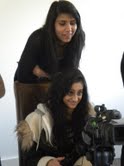

Sponsored by the European Union Youth In Action programme.
YOUTH SEMINAR AUGUST 2014
This will provide an opportunity for young Jews, Christians, Muslims and anyone with an interest in the Middle East to meet with French counterparts. The week's seminar in Somerset will look at issues of identity, attitudes to the Middle East and conflict resolution.
This is open to anyone aged between 16 and 23. Please contact us to register your interest!
********************************
What does it mean to be a British citizen? How can we feel at home in a society whose values, culture and even political decisions may raise questions for us?
Our recently concluded 'All of Us' project looked at the Kulanana project devised by the Israeli citizenship organisation Merchavim; it asked how young people in the UK can similarly consider citizenship and difference and provide models for other young people to do the same.
FACILITATION TRAINING
We are happy to provide training in our dialogue facilitation methods on Israel/Palestine.
Contact us to discuss your requirements.
We run a number of projects to help Jews, Christians and Muslims and those of no or other faiths in the UK, explore issues of pilgrimage, conflict, identity and citizenship in the context of Israel and Palestine.
Coming soon!
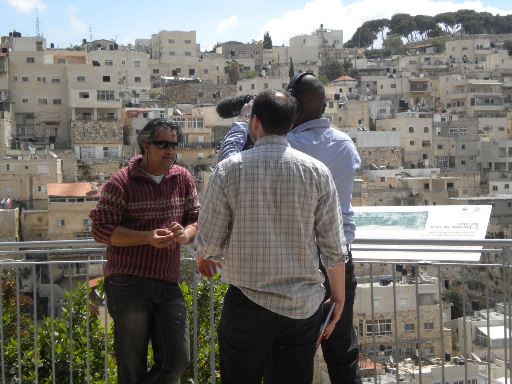
WALKING THE TIGHTROPE
While our work generally involves all faiths and none in dialogue together, each faith does
have specific needs and questions to address. This resource is designed for Christians in
particular.What are the expectations of Christians who go on pilgrimage to the Holy Land? What should pilgrimage be about?
Travelling to the Holy Land cannot be a neutral activity. Decisions and choices made always affect the people who live there in one way or another. This 30 minute DVD puts the case for a pilgrimage which engages with both the historical stones and the 'living stones' - the people of the Land.
The film uses interviews with Jews, Christians and Muslims, Israelis and Palestinians, and travels around the holy sites. It asks potential pilgrims to consider how they can bring Christian values to their pilgrimage.
Also included are a Study Guide (divided into 6 sections) to accompany the DVD and a 12- page booklet 'Planning Your Pilgrimage', with useful notes, contacts and a brief history of Christian travel in the Holy Land.
All this for only £8.99 + £2.95 p&p!
Produced with support from the United Reformed Church and the Sir Halley Stewart Trust
To get your copy, send a cheque and your postal details to: FODIP, CMS House, Watlington Road, Cowley, Oxford OX4 6BZ, or use the button below to pay via PAYPal (includes a facility to use a credit/debit card.)
WOMENS VOICES
Based in Greater Manchester, this project provides young women with skills to manage and deliver community-based projects. (Contact: [email protected]) Sponsored by Paul Hamlyn Foundation. Read more>>>>>
TOUGH OPTIONS
FODIP is experienced in helping groups and individuals explore how we feel about the Holy Land, our differing fears and our shared hopes.
We offer training to those wanting or needing to facilitate such dialogue.
Contact us for further details.
We are also happy to advise or provide information on dialogue or travel for interfaith groups or individuals free of charge.
"Reassuring and positive!""Constructive and reflective activities made emotions easier to contain."
"Nice focus on the future and concrete actions to be taken."
"A distinctive contribution to dialogue on Israel-Palestine."
Download our Ten Principles of Dialogue
YOUTH PROJECTS
Sponsored by the European Union Youth In Action programme.
YOUTH SEMINAR AUGUST 2014
This will provide an opportunity for young Jews, Christians, Muslims and anyone with an interest in the Middle East to meet with French counterparts. The week's seminar in Somerset will look at issues of identity, attitudes to the Middle East and conflict resolution.
This is open to anyone aged between 16 and 23. Please contact us to register your interest!
********************************
What does it mean to be a British citizen? How can we feel at home in a society whose values, culture and even political decisions may raise questions for us?
Our recently concluded 'All of Us' project looked at the Kulanana project devised by the Israeli citizenship organisation Merchavim; it asked how young people in the UK can similarly consider citizenship and difference and provide models for other young people to do the same.
FACILITATION TRAINING
We are happy to provide training in our dialogue facilitation methods on Israel/Palestine.
Contact us to discuss your requirements.
Helping the conversation: a FODIP workshop with the Coexistence Trust's Campus Ambassadors
Why is this needed?
There is already a substantial amount of debate on the Israeli-Palestinian conflict in Britain.
However, most conversations in the UK on this topic have become polarised.
Jews, Christians and Muslims are often passionately concerned about the region, but emotive exchanges can be negative and difficult. Within the Church, polarisation has resulted in disunity and confrontation.
FODIP is experienced in helping people from a variety of backgrounds and perspectives to seek out common aims, hear difficult stories and understand more deeply the fears and concerns of others.
There is already a substantial amount of debate on the Israeli-Palestinian conflict in Britain.
However, most conversations in the UK on this topic have become polarised.
Jews, Christians and Muslims are often passionately concerned about the region, but emotive exchanges can be negative and difficult. Within the Church, polarisation has resulted in disunity and confrontation.
FODIP is experienced in helping people from a variety of backgrounds and perspectives to seek out common aims, hear difficult stories and understand more deeply the fears and concerns of others.
Goals:
Values:
Promoting understanding, empathy and respect between individuals and communities, valuing our common humanity.
Parameters:
- To enable Jews, Christians, Muslims - and those of other faiths and none - to talk positively and sensitively together about Israel/Palestine.
- To create and maintain safe spaces for difficult conversations.
- To promote mutual trust as the foundation for building good relations.
- To provide opportunities to share and to listen to different perspectives.
- To welcome challenging discourse.
Values:
Promoting understanding, empathy and respect between individuals and communities, valuing our common humanity.
Parameters:
- Independent of any one faith or religious body.
- Embedded in the UK conversation.
- No one shared political position on the Israeli/Palestinian conflict.
- Transparency in meeting our goals and values, especially in relation to funding.
PATRONS
 Lord Harries of Pentregarth, former Bishop of Oxford, has written extensively on the ‘Abrahamic faiths’ as well as on Christian theology dealing with matters including ethics, secularism and war and peace. Former Dean of Kings College, London, Professor Harries was Chair of the Council of Christians and Jews and founded the Oxford Jewish Christian Muslim dialogue group.
 Rabbi Dr Tony Bayfield is Head of the Movement for Reform Judaism and a President of the Council of Christians and Jews. A pioneer of serious inter faith dialogue in Britain, he has spoken and written extensively on the process and his collaborative publications include Dialogue with a Difference (1992) and He Kissed Him and They Wept: Towards a Theology of Partnership (2001). He is currently working on a publication jointly edited with Alan Race and Ataullah Siddiqui.
 Shaykh Dr Abdal Hakim Murad (Tim Winter) is Lecturer in Islamic Studies at the Faculty of Divinity, University of Cambridge, and is acknowledged as a leading Islamic scholar in Britain. His inter faith work includes joint editorship of Abraham’s Children (2006) with Lord Harries and Rabbi Norman Solomon.
 Dr Usama Hasan is an imam and scientist, holding senior lecturing posts at both the University of Middlesex and the Royal Observatory Greenwich. Former Director of the City Circle, a forum for young Muslim professionals in London, Dr Hasan is also a prime mover in United London Stands, bringing faith communities together in the face of divisive issues and events both at home and abroad.
TRUSTEES
Chair: Steven Longden
Revd Bob Day, Pasha Shah, Leah Burman, Rabbi Warren Elf and Revd Jonathan Dean.
DIRECTOR
 Jane Clements is an Anglican Christian and the Founder of (FODIP). Prior to that, she was Director of Programmes at the Council of Christians and Jews. She has a first degree in theology (with a specialism in Islam), an MA in Hebrew and Jewish Studies and a PhD in Holocaust Education, all from the University of London.
With a background and training in Religious Education, Jane has many years of experience in inter faith relations and reconciliation work. Between 2004 and 2008, she also worked intensively with Israeli and Palestinian students from the Olive Tree programme at City University. She has been taking study groups to Israel and the West Bank for many years. Jane serves on the Archbishop of Canterbury’s Anglican Commission to the Chief Rabbinate of Israel and is a Trustee of the UK’s Holocaust Memorial Day Trust.
Jane Clements is an Anglican Christian and the Founder of (FODIP). Prior to that, she was Director of Programmes at the Council of Christians and Jews. She has a first degree in theology (with a specialism in Islam), an MA in Hebrew and Jewish Studies and a PhD in Holocaust Education, all from the University of London.
With a background and training in Religious Education, Jane has many years of experience in inter faith relations and reconciliation work. Between 2004 and 2008, she also worked intensively with Israeli and Palestinian students from the Olive Tree programme at City University. She has been taking study groups to Israel and the West Bank for many years. Jane serves on the Archbishop of Canterbury’s Anglican Commission to the Chief Rabbinate of Israel and is a Trustee of the UK’s Holocaust Memorial Day Trust.
Lord Harries of Pentregarth, former Bishop of Oxford, has written extensively on the ‘Abrahamic faiths’ as well as on Christian theology dealing with matters including ethics, secularism and war and peace. Former Dean of Kings College, London, Professor Harries was Chair of the Council of Christians and Jews and founded the Oxford Jewish Christian Muslim dialogue group.
Rabbi Dr Tony Bayfield is Head of the Movement for Reform Judaism and a President of the Council of Christians and Jews. A pioneer of serious inter faith dialogue in Britain, he has spoken and written extensively on the process and his collaborative publications include Dialogue with a Difference (1992) and He Kissed Him and They Wept: Towards a Theology of Partnership (2001). He is currently working on a publication jointly edited with Alan Race and Ataullah Siddiqui.
Shaykh Dr Abdal Hakim Murad (Tim Winter) is Lecturer in Islamic Studies at the Faculty of Divinity, University of Cambridge, and is acknowledged as a leading Islamic scholar in Britain. His inter faith work includes joint editorship of Abraham’s Children (2006) with Lord Harries and Rabbi Norman Solomon.
Dr Usama Hasan is an imam and scientist, holding senior lecturing posts at both the University of Middlesex and the Royal Observatory Greenwich. Former Director of the City Circle, a forum for young Muslim professionals in London, Dr Hasan is also a prime mover in United London Stands, bringing faith communities together in the face of divisive issues and events both at home and abroad.TRUSTEES
Chair: Steven Longden
Revd Bob Day, Pasha Shah, Leah Burman, Rabbi Warren Elf and Revd Jonathan Dean.
DIRECTOR
Jane Clements is an Anglican Christian and the Founder of (FODIP). Prior to that, she was Director of Programmes at the Council of Christians and Jews. She has a first degree in theology (with a specialism in Islam), an MA in Hebrew and Jewish Studies and a PhD in Holocaust Education, all from the University of London.
With a background and training in Religious Education, Jane has many years of experience in inter faith relations and reconciliation work. Between 2004 and 2008, she also worked intensively with Israeli and Palestinian students from the Olive Tree programme at City University. She has been taking study groups to Israel and the West Bank for many years. Jane serves on the Archbishop of Canterbury’s Anglican Commission to the Chief Rabbinate of Israel and is a Trustee of the UK’s Holocaust Memorial Day Trust.
FODIP offers a range of opinion and perspectives. Articles featured on this site reflect the views of the author and not necessarily those of Fodip or our associates.
We welcome articles from individuals and organisations in consideration for publication.
FODIP relies entirely on donations and grants from private charitable trusts. Every donation helps us to maintain and develop this important work.
FODIP relies entirely on donations and grants from private charitable trusts. Every donation helps us to maintain and develop this important work.

Registered Charity no. 1139005
Contact: Watlington Road, Cowley, OXFORD, OX4 6BZ
Tel: ++(0)1865 787458; email: info [at] fodip [dot] org; www.fodip.org
Company No. 07343229